



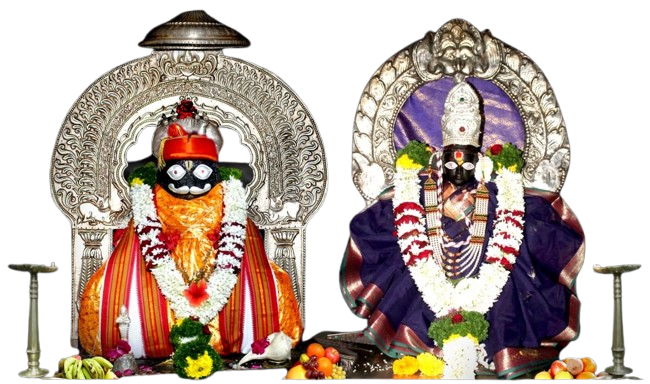
Shree Lakshmi Nrisimha Devasthan Trust
Peace • Devotion • Community
A Glimpse into the Golden Era of Shri Kshetra Nira Narasimhapur
During the reign of the Vinchurkar sardars, specifically under **Raghunathrao**, the splendor of the temple reached its zenith. The shrine wasn't merely a place of worship but a royal court for the Divine. Forty dedicated attendants were perpetually stationed to manage the elaborate daily protocols, ensuring that the air was always filled with the rhythmic sounds of drums, cymbals, and clarinets.
The village itself transformed into a thriving cultural hub. The **Vedpathshala** (Vedic school) attracted scholars from across the land, while the local markets flourished with jewelers and artisans. Because the rivers were consistently full, boats sailed through the confluence, bringing trade and prosperity.
Social equality was the hallmark of this era. The **Prasadalaya** (Food Pavilion), funded by the Patwardhans of Miraj, served meals to pilgrims of all castes and communities without discrimination, all under the protective shadow of Lord Narahari.
A massive Portuguese bell stands as a silent witness to history. Originally from a church in Vasai, it was brought as war booty by **Chimaji Appa** in 1739 and dedicated to the temple, symbolizing the triumph of the Maratha spirit.